
Every month until the 2028 conference in Copenhagen, ALA will be hosting digital talks from our very own ALA members. Below you will find the schedule for each talk. Each talk will be at 14:00 UTC on its respective day.
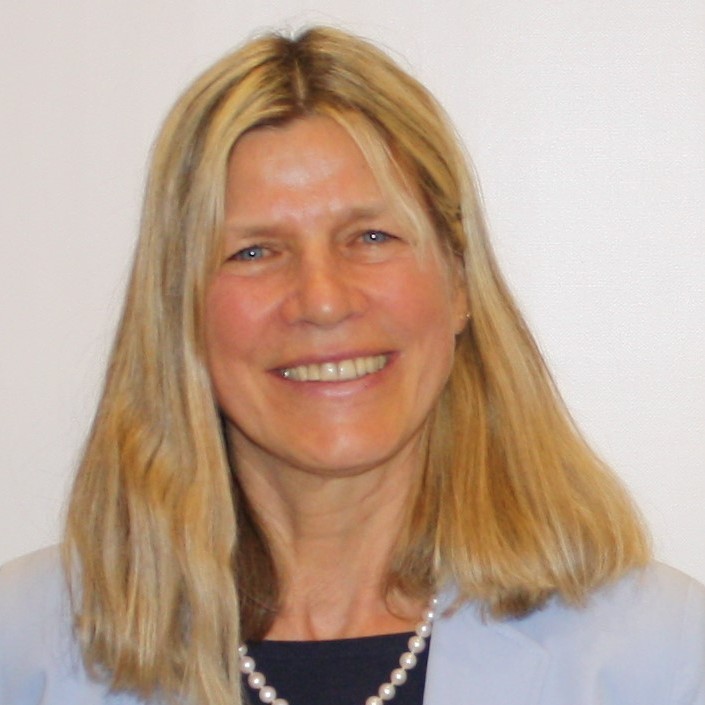
Language Awareness and Linguistic Diversity: From the Early Days into the AI Era
The Language Awareness (LA) movement now looks back on more than three decades of research, development, and professional dialogue. Its significance is reflected in the journal Language Awareness and in the work of the Association for Language Awareness, both of which have shaped the field since its early days. In this introductory digital talk, I will briefly revisit the origins of the LA movement, outline how the LA construct has evolved, and discuss its growing relevance in the AI era. A particular emphasis will be placed on linguistic diversity and linguistic identity.
Today, more than 7,000 languages are spoken worldwide. Yet only a few hundred major languages are represented on the internet and in AI applications. This imbalance raises concerns about the protection of individual language rights and the digital visibility of minoritized languages. As AI tools become widely used in private life, education, and professional contexts, the absence of clear language standards, prompting norms, and competence definitions becomes increasingly challenging.
AI systems now influence nearly all educational fields and shape a substantial portion of social interaction. Because these systems are built on data and design choices that inevitably reflect ideology, belief, and bias, language awareness becomes more essential than ever. In this talk, I will demonstrate how AI can be used and tested critically, and how an expanded form of AI language awareness can be fostered to support linguistic diversity, protect linguistic identity, and strengthen equitable participation in AI‑mediated environments.

Multilingual Awareness and Language Learning: Insights from Classroom Interaction
The development of language awareness has become an important goal in multilingual education, encouraging learners to reflect on language use and to draw strategically on their linguistic resources. Classroom interaction offers a particularly valuable setting for exploring how multilingual practices contribute to language learning and the construction of knowledge.
This presentation examines how interaction in multilingual CLIL classrooms promotes language awareness through the flexible use of learners’ linguistic repertoires. Drawing on classroom data collected in the Basque Country, the study analyses how teachers and students use different languages to negotiate meaning, facilitate communication, and support learning. Particular attention is given to episodes of pedagogical translanguaging and the ways they foster reflection on language choices, cross-linguistic relationships, and participation in classroom discourse.
The findings indicate that multilingual interaction supports not only communication and content learning but also the development of language awareness by encouraging learners to compare languages, reflect on their linguistic choices, and use their multilingual resources strategically. The presentation discusses the pedagogical implications of these findings and argues that classroom interaction provides a powerful context for fostering language awareness as an integral component of multilingual education.

Introspection, active learning & LA research
ALA defines language awareness as “explicit knowledge about language, and conscious perception and sensitivity in language learning, language teaching and language use”. My personal take has always been to frame awareness as a ‘first-person phenomenon’, which implies the primary focus on the agent of languaging (Concário, 2018; James, 1999; Swain, 2006). In this digital talk, I will address principles and (nowadays – I feel – less common) procedures in LA research that can favor second- order analysis, and data collected with language learners as agents throughout instructional mediation.
Marcelo is professor of ESP in the Department of Human Sciences of the School of Architecture, Arts, Communication and Design – São Paulo State University (UNESP, Bauru campus), Brazil. He has been a long- time ALA member, serving as an honorary officer for many years.
Sunny Man Chu Lau, Genevieve Brisson, Danièle Moore, & Magali Forte
8-12-2026 – 14:00 UTC
Reading Plurilingual Texts: Promoting Children’s Critical Language Awareness through Engagement with Unfamiliar Languages
This talk describes findings from a plurilingual comprehension task that a Grade 6 class in Québec, Canada completed independently to establish a baseline understanding of existing language awareness and critical reading abilities (Lau et al., 2026). The task formed part of a larger project, informed by plurilingualism and critical literacies (Castellotti & Moore, 2010; Lau, 2019), which brings teachers of French and English as a second language (ESL) together to foster reciprocal language learning and deeper engagement with eco-social issues. We focus on critical moments (Wahlström & Schmidt, 2024) that capture key instances when students actively made sense of their wonderings about the story development and engaged with both familiar and unfamiliar languages (French, English, Spanish and Chinese) in a reconstructed plurilingual picturebook. The findings reveal students’ emerging abilities to work across languages, make sense of unfamiliar linguistic features, draw on reading strategies across linguistic and visual modes, and exercise critical judgement regarding the issues presented in the text. These early findings suggest that drawing on all students’ languages to engage them in plurilingual inquiry can strengthen critical language awareness and critical literacies. The study offers practical insights for teachers and highlights directions for further research.